
A big game changer in performance is not stopping between songs, but smoothly transitioning between two.
But the question is how to move smoothly between keys? Answer: SImple Harmony
If you’ve ever tried to move from one song to another and it felt abrupt or clunky, you’re not alone. The solution lies in two types of chords:
- Pivot chords
- Passing chords
Let’s break these down using a simple, real example in the key of C major.
The Musical Context
We’re working within the scale:
C – D – E – F – G – A – B – C
Song 1 progression:
C → F → G → C
Song 2 progression:
Am → F → C → G
At first glance, these look related—and they are. But transitioning between them smoothly still requires intention.
What is a Pivot Chord?
A pivot chord is a chord that exists in both the original key and the destination key.
Think of it as a shared doorway between two musical rooms.
In this example:
- G major appears in both progressions
- It functions naturally in C major (as the V chord)
- It also leads smoothly into the harmonic world of Song 2
👉 That makes G major your pivot chord
What is a Passing Chord?
A passing chord connects two chords that don’t naturally flow into each other.
It’s less about belonging and more about movement.
In this example, a passing chord can be:
F♯/A
This chord does something really important:
- It introduces a note (F♯) that is outside of C major
- That “outside” note creates tension
- That tension pulls us forward into the new progression
👉 It acts as a bridge
Why This Works (Musically)
This progression works because it combines two types of motion:
1. Familiarity (Pivot)
The listener hears something recognizable (G major) and stays grounded.
2. Tension (Passing)
The F♯ introduces a new color that signals:
“We’re going somewhere new.”
3. Resolution
That tension resolves naturally into A minor, which now feels like a logical destination. You can think of it as a mini progression inside of the bigger one.
Final Thought
Great musicians don’t just play songs—they connect musical ideas, and creat a landscape for the listeners. If you want to learn more about this watch Quinn’s video, and be sure to subscribe to our channel. It’s the best way to support us. ❤️
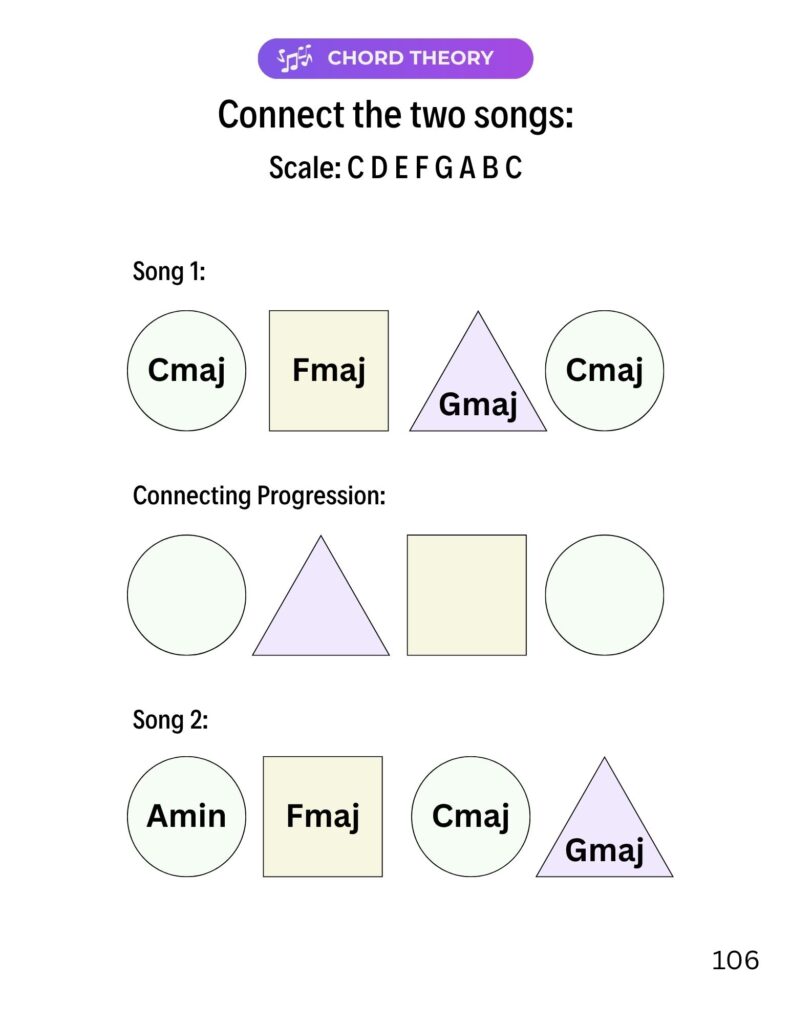
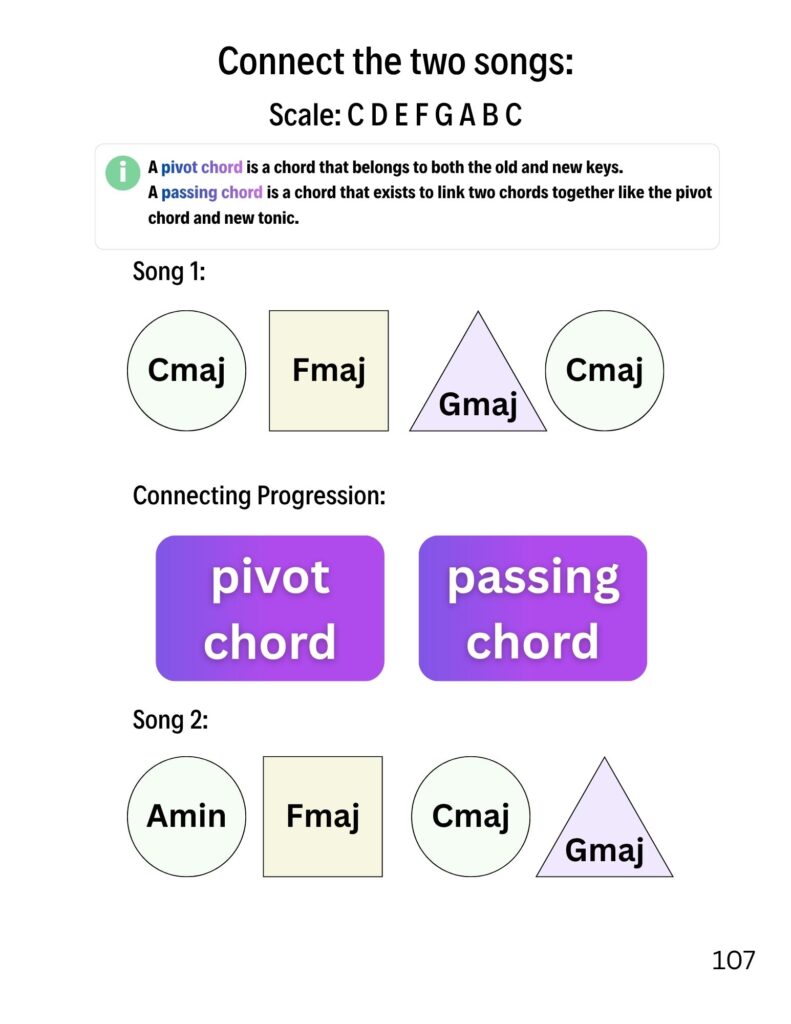
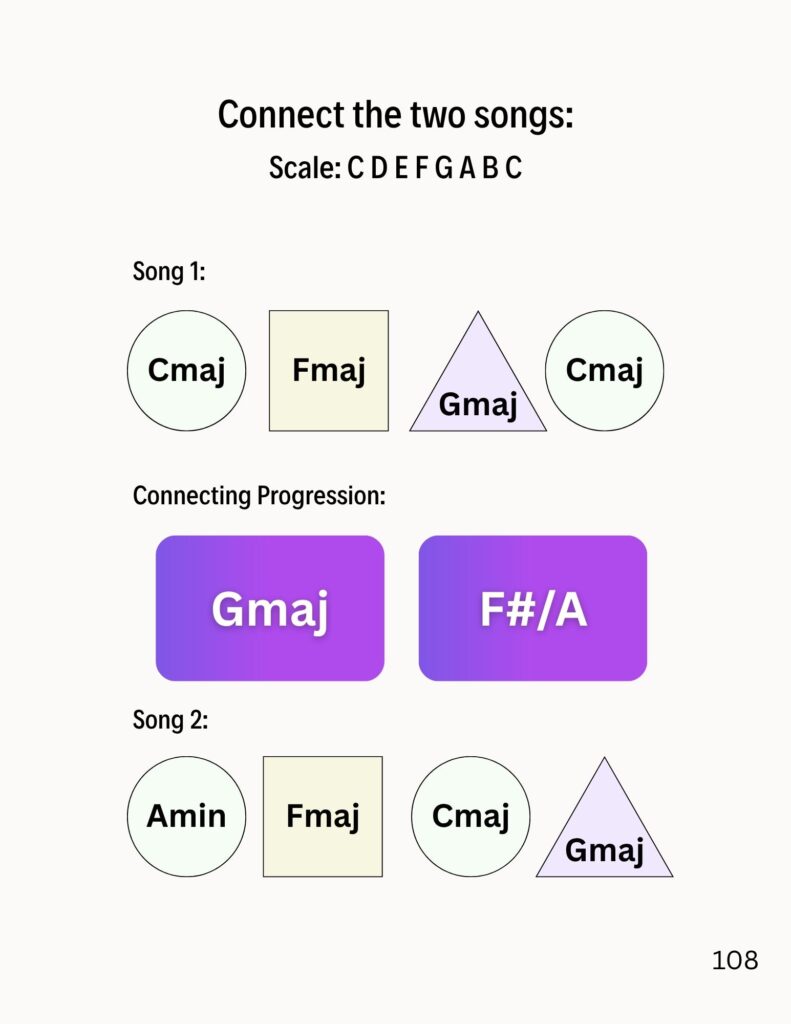
Chord progression builder
Create two progressions and add connecting chords in the middle